

ART IN THE NEW CAPITOL
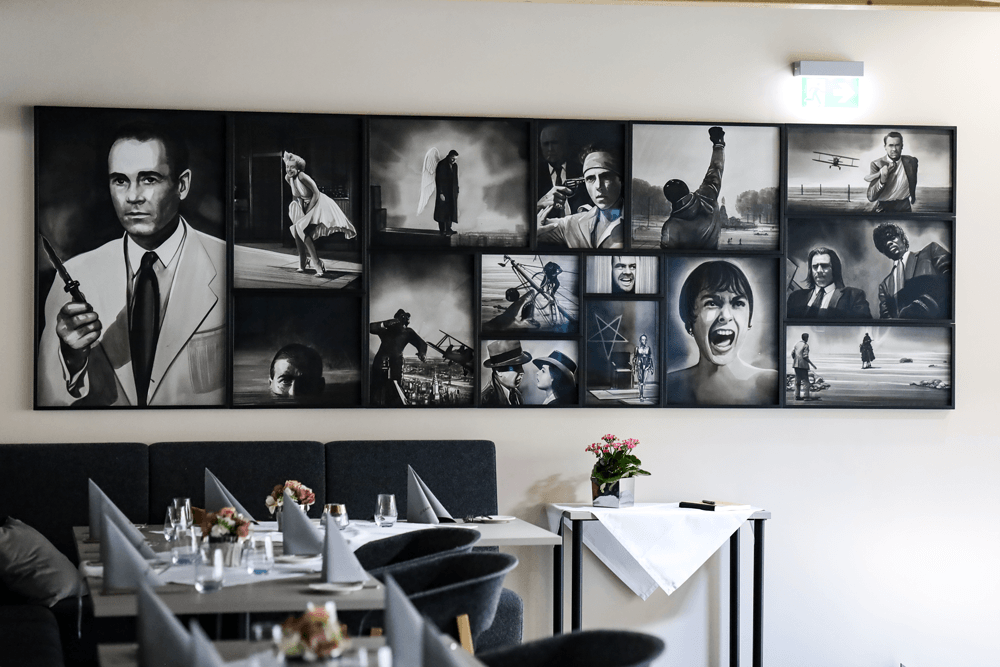
The Art of Milak Radenko
What role does contemporary image production play in the formation of our historical and cultural memory? This question lies at the heart of the work of Radenko Milak, who gained international recognition in 2017 with his contribution “University of Disaster” for the Bosnia and Herzegovina Pavilion at the Venice Biennale.
In his paintings, the artist, born in Bosnia and Herzegovina in 1980, combines photographic representation with painterly narrative. His works are based on images from films, reports, or press photographs, which he translates into the medium of painting using watercolors. In the 15-part tableau titled “Movie Panel,” the artist brings together iconic film images ranging from King Kong and Casablanca to Pulp Fiction. Viewed from a distance, the paintings appear like photographs; only up close does the translucent application of paint become apparent. Milak first mixes the watercolor with water to a liquid consistency and then quickly applies it to the dampened paper. This process creates blurred and sometimes randomly flowing areas of color and clearly visible watermarks, marking a painterly signature.
Through this media transfer, the artist plays with the different ways in which images construct meaning and brings together various narrative strategies: the overarching narrative of film, photography as a “record” of reality, and painting as the individual production of signs.
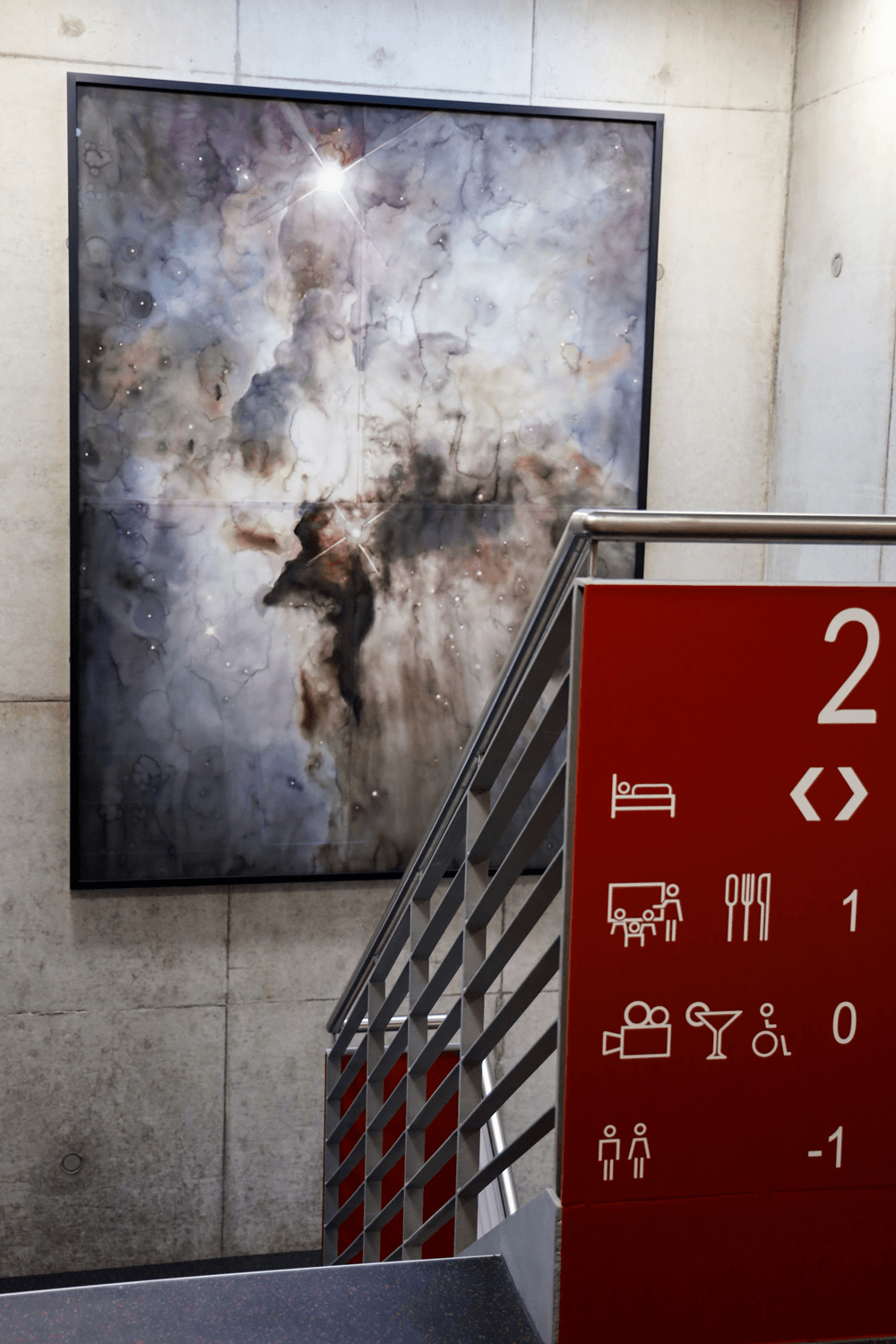
Another work by Milak Radenko can be seen in the stairwell of the New CAPITOL: “Hubble View of the Lagoon Nebula” is the title of the watercolor measuring 252 x 185 cm. Created in 2020.
Thomas KellnerChapel schools in Siegerland-Wittgenstein
Compulsory education was introduced in Germany as early as the 16th century, but at that time, there weren’t buildings specifically designed for schooling everywhere. Therefore, in the counties of Nassau-Dillenburg and Nassau-Siegen, classes were held in so-called chapel schools. These buildings are distinctive because they are usually freestanding, half-timbered, and topped with a bell tower. They served multiple purposes, including religious worship, school lessons, and agricultural activities.
Thomas Kellner’s art photography offers a fresh perspective on these buildings, typical of the Siegerland-Wittgenstein region. During his studies of art, politics, and economics at the University of Siegen, Kellner discovered pinhole photography. In 1996, he received the Kodak Young Talent Award, and in the following years, his interest in architecture and Cubism (a movement in art history) developed. Today, he focuses on artistic photography, is known for his work with contact sheets, and his art opens up new perspectives.
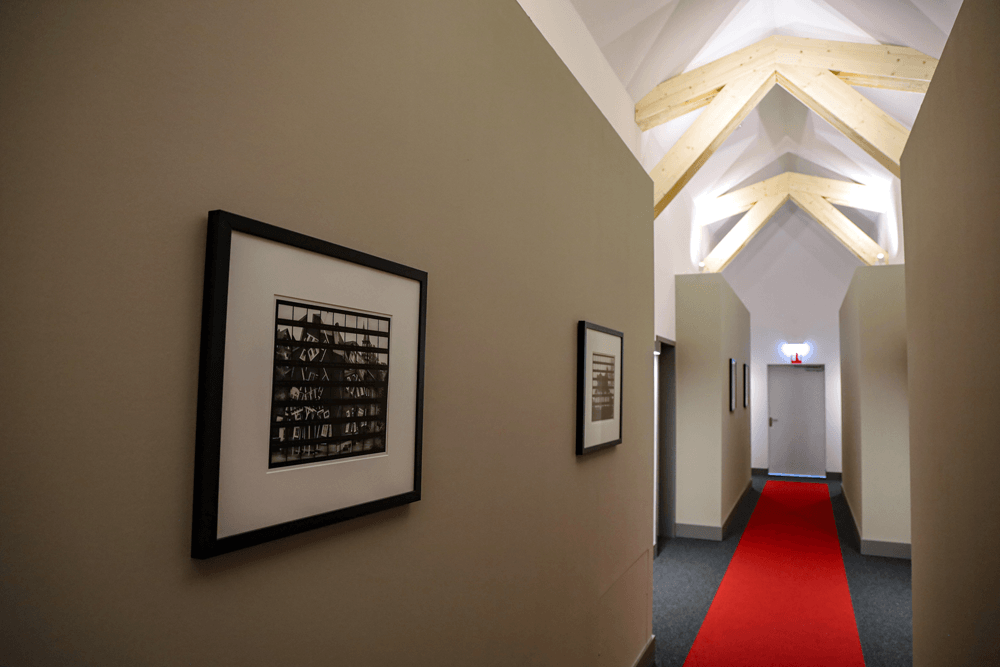
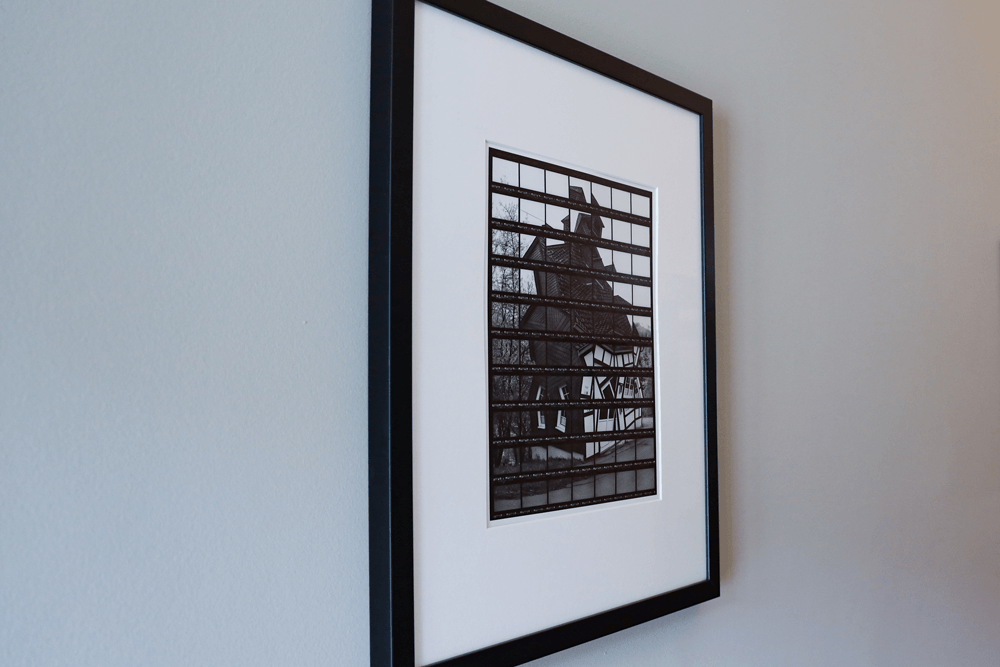
Just as chapel schools once united different aspects of life, Kellner’s art today unites diverse perspectives on the history and origins of these buildings. By first taking numerous photographs of a chapel school, then rearranging the film strips after development and assembling them on contact sheets, Kellner creates a new dynamism within the otherwise static architecture. His images depict something the viewer recognizes, while simultaneously feeling as if they are seeing it for the first time. This compels the viewer to linger and not immediately categorize the image. This characteristic of his art is exemplified by the typical bell tower of a chapel school, which, in Kellner’s photographs, loses its rigidity, becomes abstract, and appears to optically multiply.
On display at the New Capitol are photographs of former chapel schools in the villages of Altertshausen, Birkefehl, Dotzlar, Hemschlar, Hesselbach, Laaspherhütte, Richstein, Sassenhausen, Schwarzenau, Wingeshausen, Wunderthausen, and Zinse.